The Future Is Physical: Radical Preservation at the Atlanta Radical Book Fair
On October 25, 2025, I joined an incredible panel of archivists and librarians at the 9th Annual Atlanta Radical Book Fair, held at the historic Auburn Avenue Research Library on African American Culture and History. Organized by Rubén A.L. Villegas and Wren of Auburn Avenue Research Library, the conversation—titled The Future Is Physical—gathered practitioners dedicated to preserving Black knowledge in both its tangible and intangible forms.
Keep Your Books!
Guided by the urgent theme “Keep Your Books!”, our discussion centered on how physical preservation resists disappearance in an increasingly digital world. Each panelist offered a powerful meditation on the relationship between technology, memory, and material culture:
Ashby Combahee, Archivist and Librarian at the Highlander Research and Education Center, reflected on her deep-rooted love for physical sound recordings—from cassette tapes to vinyl—and how her organization’s devastating 2019 fire revealed the vulnerability of overreliance on digital storage. What survived, she reminded us, were the physical materials kept and cared for by generations of community members.
Camden Hunt, founder of The Free Black Library, shared her story of transforming a Google Doc of Black liberation texts into a thriving network of physical libraries, zines, and film screenings connecting Atlanta and Nashville. Her work stands in defiance of book bans and digital erasure—an active insistence that Black media and literature must remain accessible in physical form.
I spoke as Dr. shady Radical, founder of The Radical Archive Project, about the embodied dimensions of preservation—the smell of paper, the texture of photographs, the sonic weight of an unplayed cassette. Archiving, I shared, is not only a technical process but a deeply relational practice. Each act of care, whether cataloging or costuming, becomes part of a living ecosystem of memory.
When the Internet Fails
One of the most thought-provoking moments came when we were asked:
If we experienced a catastrophic internet outage lasting several months, what physical materials in your collection would suddenly become most valuable to your community?
The question reminded us that physical archives are more than backups—they are anchors. Books, photographs, VHS tapes, and letters hold value not because they are rare, but because they are reachable. They do not require electricity, subscriptions, or servers—just hands, eyes, and care.
In response, I shared that one of the most overlooked yet powerful things to preserve is clothing. Textiles and garments carry not only aesthetic and cultural significance—they carry DNA. They hold traces of sweat, perfume, skin, and memory. In many ways, clothing is as close as we will ever get to the body itself.
Preservation, then, is not only about saving objects—it’s about preserving people, especially the Black body and the cultures housed within it. When we care for our clothes, we are caring for evidence of our existence, our movement, and our style as forms of resistance. This is why clothes should matter more: because they are the closest thing to the body, and thus, the archive most alive.
We also wrestled with difficult questions about sustainability, copyright, and obsolescence. What do we do with materials that require outdated technology? How do we justify the energy required to preserve them? Yet, we agreed that what’s at stake is more than format—it’s freedom.
Radical Stewardship
The Future Is Physical was a reminder that the archive is not a static place—it is a movement, an atmosphere, a community. It is built by those who save, share, and sustain the evidence of our existence.
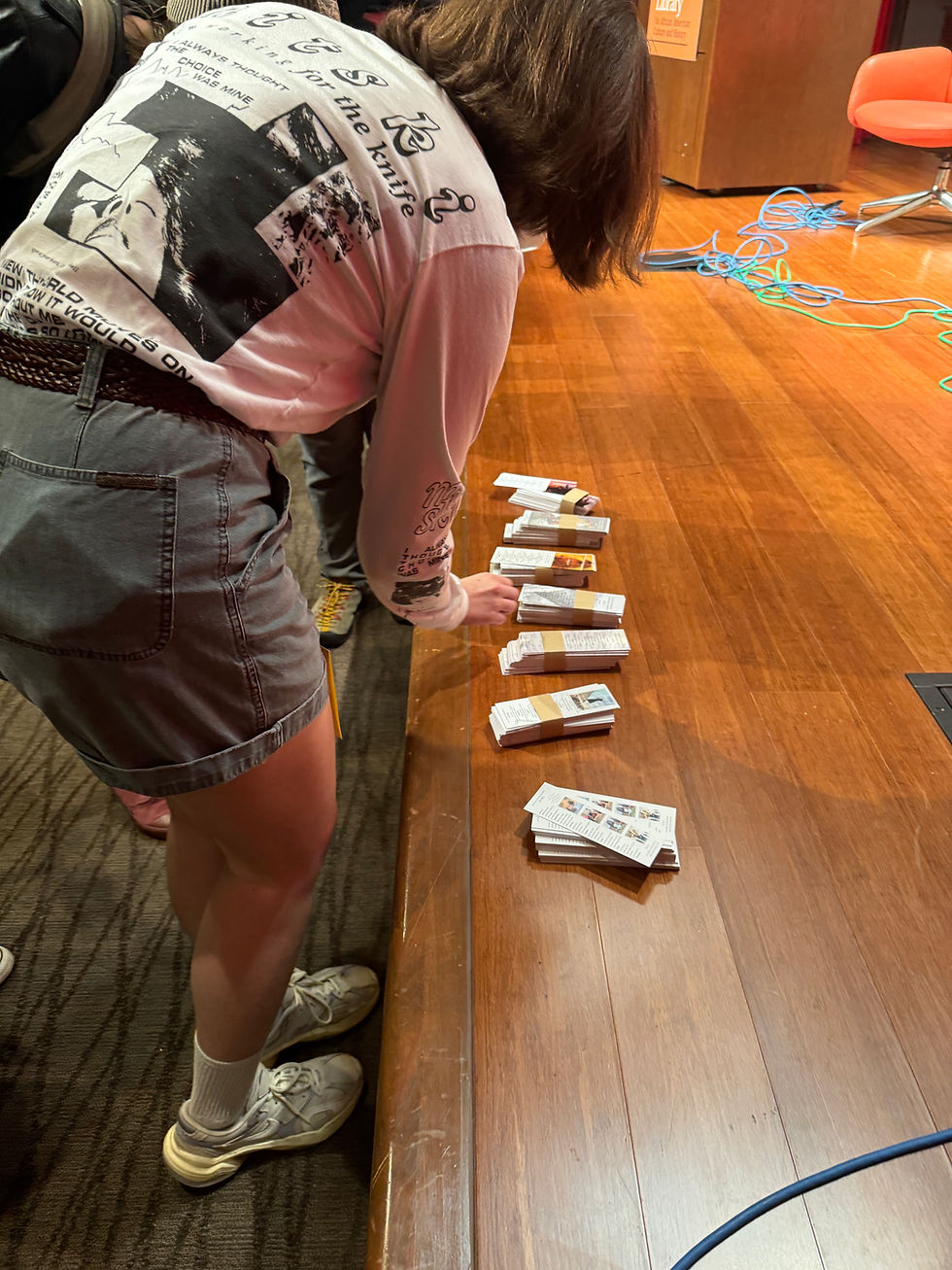
I left the conversation inspired by my fellow panelists, by the vision of Rubén A.L. Villegas and Wren, and by the energy in that room filled with artists, readers, and memory workers. As part of the event, I shared bookmarks promoting the upcoming 2026 Rooted in Memory II Workshop Series—an extension of The Radical Archive Project’s commitment to community-centered archival practice.
If you see me in the streets, ask for a bookmark. It’s not just a piece of paper—it’s an invitation to remember, to preserve, and to stay connected.
Because the future isn’t just digital.
The future is physical.



Comments